

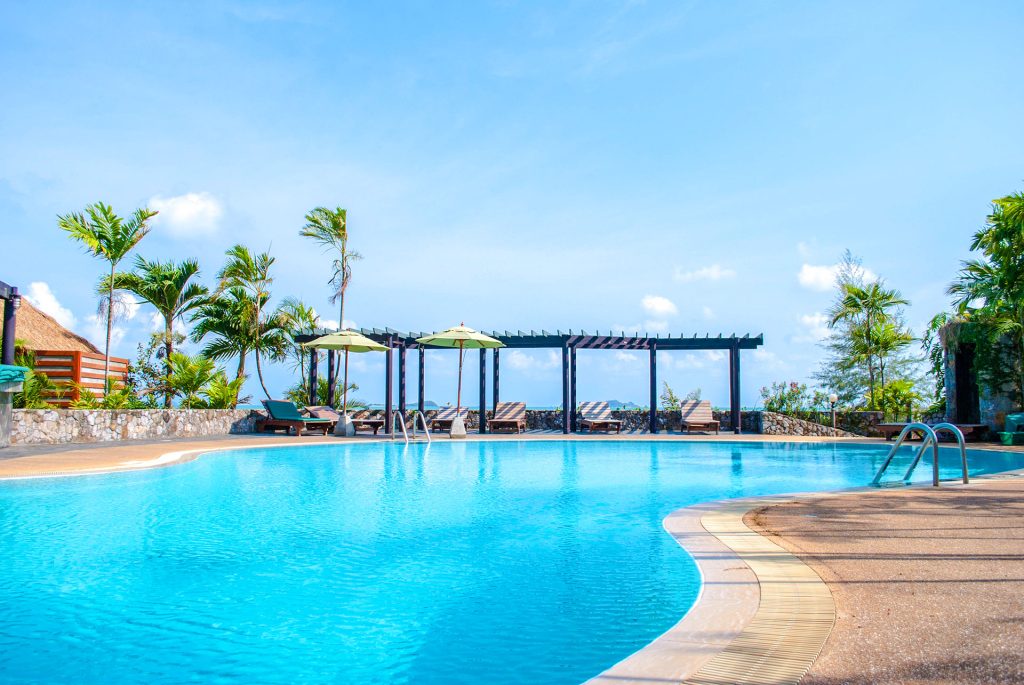
Imagine stepping out your back door on a warm summer evening, the sun casting a golden glow over a sparkling pool surrounded by elegant stonework, cozy seating areas, and beautifully designed walkways. This is the magic of well-executed pool hardscape design, where functionality meets aesthetic appeal to create an outdoor oasis you’ll never want to leave. Whether you’re planning a new pool installation or revamping an existing one, the hardscape elements you choose will define the entire character of your backyard retreat.
What Is Pool Hardscape?
Pool hardscape refers to all the non-living, structural elements that surround and complement your swimming pool. Unlike softscape (plants, grass, and flowers), hardscape includes the permanent, hard materials that shape the functionality and beauty of your pool area.
These elements work together to create cohesive outdoor living spaces while providing essential safety, accessibility, and visual appeal. A well-designed hardscape can dramatically increase your property value while extending the usable square footage of your home into the outdoors.
Common Pool Hardscape Elements
- Pool decks and patios: The primary surface surrounding your pool
- Coping: The cap or edge that surrounds the pool’s perimeter
- Retaining walls: Structural elements that manage elevation changes
- Outdoor kitchens and bars: Built-in entertainment features
- Fire pits and fireplaces: Cozy gathering spots for cooler evenings
- Pergolas and pavilions: Shaded structures for relief from the sun
- Walkways and steps: Connections between different areas
- Water features: Fountains, waterfalls, and decorative elements
Why Pool Hardscape Design Matters
Investing in quality pool hardscape isn’t just about aesthetics, it’s about creating a safe, functional, and long-lasting outdoor environment. The right design choices can mean the difference between a pool area you love for decades and one that requires constant maintenance and updates.
For homeowners looking to transform their backyards into resort-style retreats, working with experienced professionals in custom pool hardscaping ensures that every detail, from drainage to material selection, is handled with precision and craftsmanship.
Top Materials for Pool Hardscape
Choosing the right materials is perhaps the most critical decision in your pool hardscape project. Each option offers distinct advantages in terms of appearance, durability, slip resistance, and price point.
1. Natural Stone
Natural stone, including travertine, flagstone, limestone, and bluestone, remains the gold standard for luxury pool surrounds. It offers unmatched beauty, stays cool underfoot (especially travertine), and provides excellent slip resistance when textured properly.
2. Concrete Pavers
Concrete pavers offer incredible versatility, available in countless colors, shapes, and textures. They’re durable, relatively affordable, and individual pavers can be replaced if damaged—a major advantage over poured concrete.
3. Stamped Concrete
Stamped concrete provides the look of natural stone or pavers at a lower cost. While beautiful, it requires periodic sealing and can crack over time, so professional installation is essential.
4. Porcelain Pavers
Modern porcelain pavers are increasingly popular for contemporary pool designs. They’re extremely durable, fade-resistant, low-maintenance, and available in stunning realistic finishes that mimic wood, stone, or concrete.
5. Brick
Classic brick brings timeless charm and excellent durability to traditional-style homes. It pairs beautifully with both formal and rustic pool designs.
Key Design Considerations for Your Pool Hardscape
Beyond material selection, several crucial factors influence the success of your pool hardscape project. Thoughtful planning at the outset prevents costly modifications later.
Safety First
- Slip resistance: Choose textured surfaces that maintain traction when wet
- Heat reflection: Light-colored materials stay cooler in direct sun
- Smooth edges: Coping should be rounded to prevent injuries
- Proper drainage: Water should flow away from the pool and home
Functional Flow
Consider how people will move through and use the space. Allow at least 4-6 feet of deck space around the entire pool, with larger gathering areas near entry points and lounging zones. Plan clear pathways to outdoor kitchens, dining areas, and the home itself.
Style Cohesion
Your pool hardscape should complement your home’s architecture and existing landscape. A modern minimalist home calls for clean lines and sleek materials, while a Mediterranean-style residence pairs beautifully with travertine and warm tones.
Popular Pool Hardscape Design Trends
Resort-Inspired Layouts
Sweeping curves, multi-level decking, and integrated water features create vacation-worthy spaces right at home.
Outdoor Living Rooms
Defined zones with built-in seating, fireplaces, and pergolas extend living space outdoors year-round.
Mixed Materials
Combining stone, wood, and concrete creates visual interest and defines functional zones beautifully.
Sustainable Design
Permeable pavers, native plant integration, and energy-efficient lighting reflect eco-conscious values.
Maintenance Tips for Long-Lasting Pool Hardscape
Even the most beautifully designed pool hardscape requires regular care to maintain its appearance and structural integrity over the years.
- Clean regularly: Sweep debris and rinse surfaces weekly to prevent staining and buildup
- Seal periodically: Most materials benefit from sealing every 2-3 years to protect against chlorine, salt, and weather damage
- Inspect for damage: Check for cracks, settling, or loose pavers each spring and address issues promptly
- Manage drainage: Keep drains clear and watch for pooling water that could indicate larger problems
- Treat stains immediately: Address oil, rust, or organic stains quickly before they set permanently
Budgeting for Your Pool Hardscape Project
Pool hardscape costs vary widely based on materials, size, and design complexity. Basic concrete decking might run $6-$10 per square foot, while premium natural stone installations can exceed $30 per square foot. Custom features like outdoor kitchens, fire features, and elaborate water elements add significantly to the investment.
The key to budgeting wisely is prioritizing what matters most to you. Many homeowners choose to install foundational elements first and add luxury features in phases, allowing them to achieve their dream space over time without compromising on quality.
Working with Pool Hardscape Professionals
While DIY projects have their place, pool hardscape installation typically requires professional expertise. Proper grading, drainage planning, foundation preparation, and material installation all demand specialized knowledge and equipment.
When selecting a contractor, look for these essential qualifications:
- Proper licensing and insurance
- Extensive portfolio of completed pool projects
- Strong customer reviews and references
- Detailed written estimates and contracts
- Clear communication and design collaboration
- Manufacturer certifications for the materials they install
Final Thoughts on Pool Hardscape Design
A thoughtfully designed pool hardscape transforms an ordinary backyard into an extraordinary outdoor living experience. By carefully considering materials, layout, safety, and style, you can create a space that serves your family beautifully for decades to come. From the practical considerations of drainage and slip resistance to the aesthetic choices of stone selection and design themes, every decision contributes to the final result.
Whether you’re drawn to the timeless elegance of natural stone, the versatility of pavers, or the sleek modernism of porcelain, your perfect pool hardscape is achievable with proper planning and skilled craftsmanship. Take time to explore your options, work with experienced professionals, and invest in quality materials; the dividends in enjoyment, functionality, and home value will far exceed the initial expenditure. Your dream backyard oasis is closer than you think.